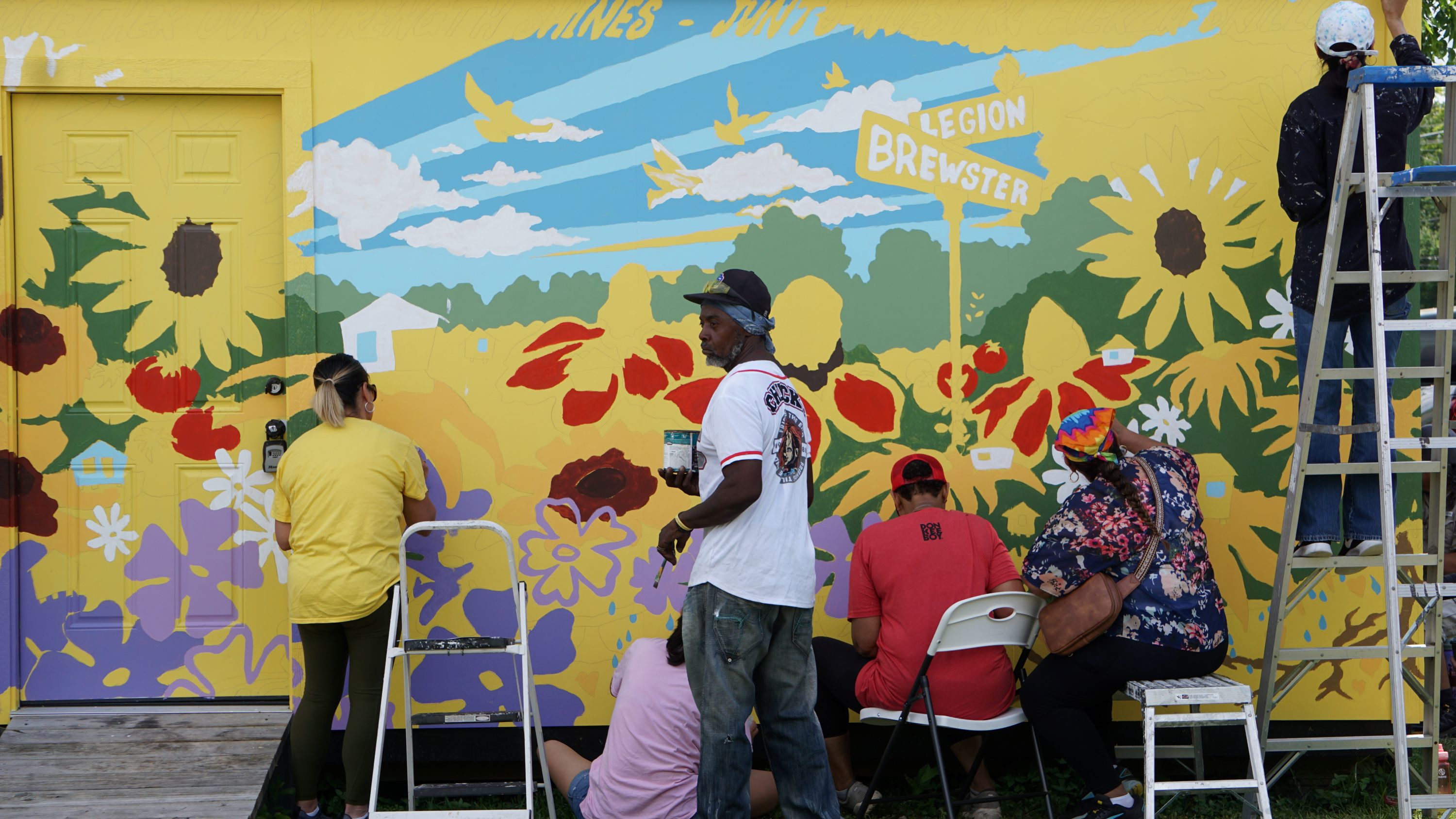
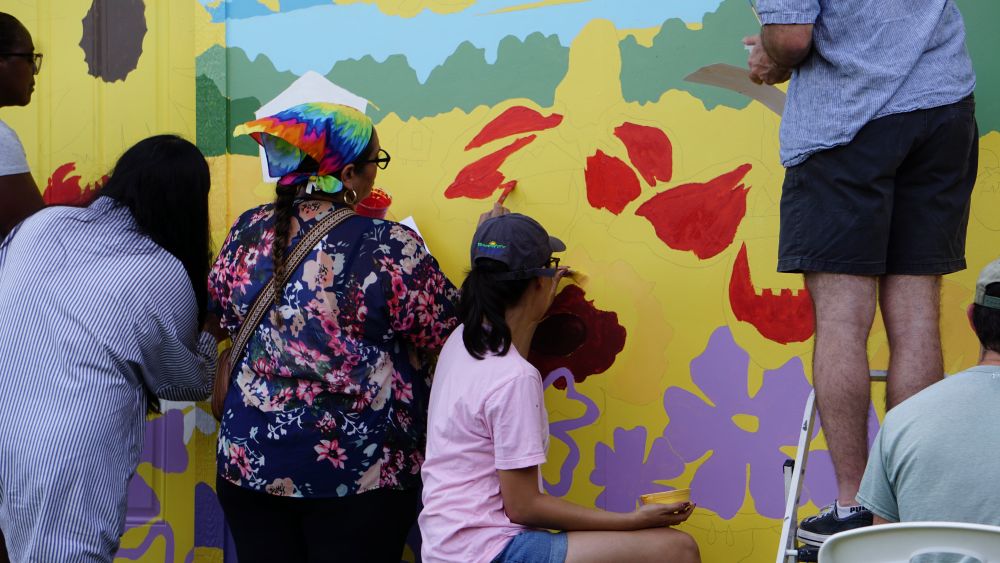
Residents painting a community mural highlighting themes of flood resilience at Ms. Connie's Hub House in Summer 2026
The Houston Climate Justice Museum worked with artists and community members to co-design and install a public mural through a participatory design process to highlight themes of community flood resilience and neighbor-to-neighbor relationships.
In July, the Houston Climate Justice Museum honored the efforts of grassroots community organizations and leaders with the unveiling of a community-made mural representing all of the work that neighbors have done to build unity and raise awareness about flood resilience efforts in Kashmere Gardens. Kashmere Gardens is one of many historic African-American communities in Houston, Texas. For years, the community has faced environmental issues due to both exposure to creosote from nearby industrial pollution, and also Houston’s vulnerability to severe weather. Through all of these challenges the community has continued to grow and show self-determination by working to mitigate these problems together.
HCJM collaborated with local grassroots organizations the Northeast Action Collective (NAC) and West Street Recovery(WSR), working as a collective unit for months to design and install the mural – making project decisions, planning community workshops, reaching out to people in the community, and organizing days for painting the hub house mural. Both of these grassroots organizations served as members of our steering committee.
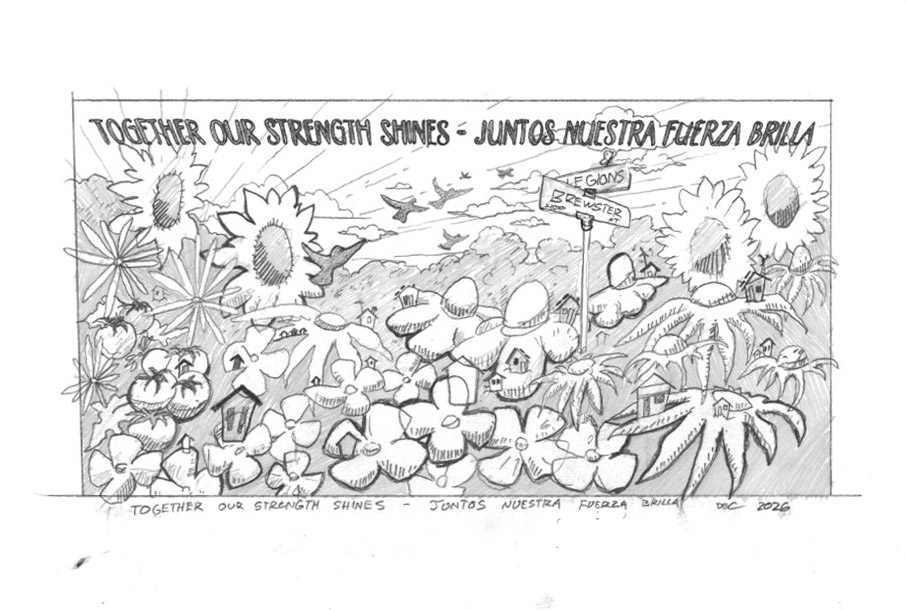
Original sketch by co-leading artist David Cobb
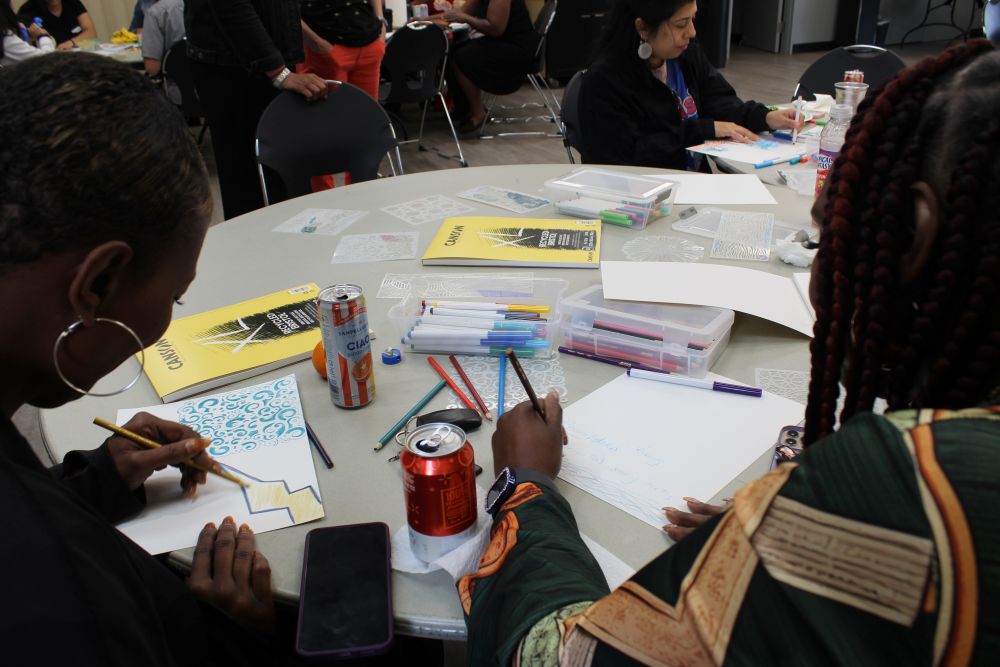
We did this work with one goal in mind: to create a mural that everyone in the community could see to appreciate the efforts of neighbors and community leaders who are fighting for flood resilience. The steering committee group specifically made decisions on the artist selection, mural location and format, and the overall direction of the project. The workshops we co-organized played a major role in getting community members out to be a part of this, and help spread the word about this unveiling. We had almost 100 community members come out and participate in these workshops. Some of the activities that were facilitated for those attending these workshops were oral interviews, group conversations, writing, and art making activities such as collages and stencil drawings. We want to thank both of these groups and the community members that did so much on the ground work.
Residents in Kashmere Gardens and Fifth Ward have been dealing with environmental justice issues since the 1970s, due to a plant explosion that exposed chemicals like creosote to the community. Many residents have lost their lives to cancer after being exposed to the chemicals from the explosion. On top of already being affected by exposure to life threatening pollutants, both communities also deal with severe weather issues that are worsened by climate change. The lack of protection from cancer-causing industrial pollution, because of insufficient state and federal regulation to this exposure, and underfunded public infrastructure that could better protect residents from flooding (or at least provide a means to recover from these life threatening impacts) has led to residents relying more on themselves via mutual aid efforts and creating natural interventions for flooding and soil remediation.
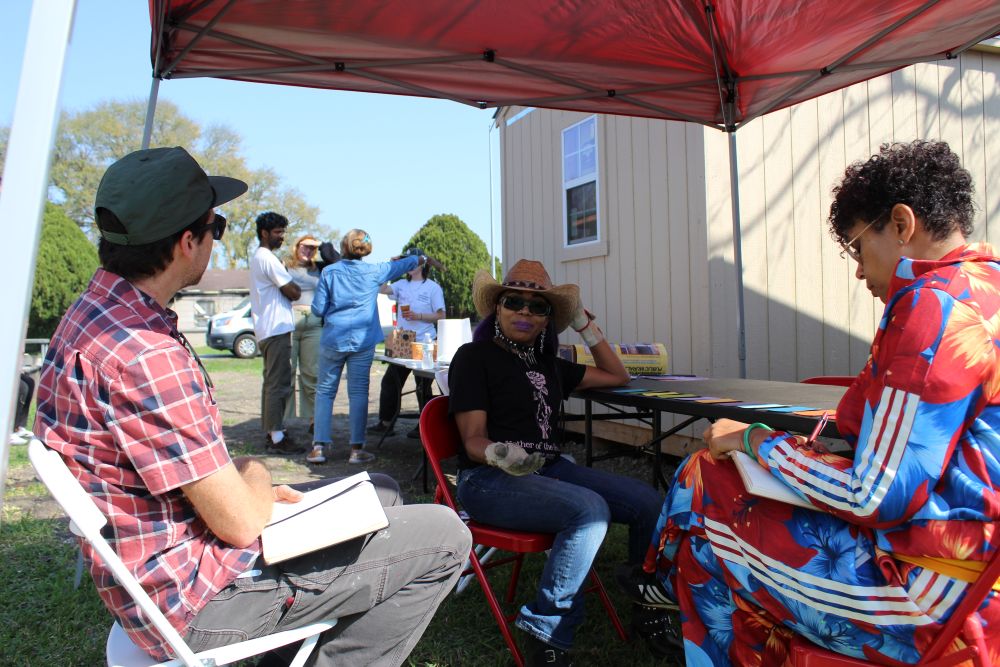
Community conversations to co-design the mural started early in 2026
Residents painting mural at Ms. Connie's Hub House
Artist-led workshops engaged community members in art-making activities to explore themes of community flood resilience
Arpillera made by women from the town Melipilla. Women make wool and cook in the foreground, 1995. From Art Against Dictatorship: Making and Exporting Arpilleras Under Pinochet by Jacquiline Adams
During these natural disasters residents in both communities have to rely on using their own trucks, boats, and other personal vehicles to help others in the community get to safety. Community members tend to have to pick up the slack of the City's job of providing aid to the people living in Kashmere Garden, and Fifth Ward. People that live in the community that are able to help usually do things like check on the elderly, give food and water, and clean up damaged areas of properties. The City of Houston is responsible for helping both of these communities during natural disasters. Yes the community comes together duing these issues, but it's the city’s responsibility to resolve these issues.
Climate disasters like Hurricane Harvey left a lot for residents to clean up once the storm was over, with some people even losing their homes. Harvey caused abnormal levels of rain which then led to significant flooding throughout the city of Houston that was reported to be waist deep. However, flooding is particularly a major issue in Kashmere Gardens, and is something we are pushing awareness of in the community, because people have lost their cars, closed their businesses , and have overall experienced widespread displacement from their homes and community.
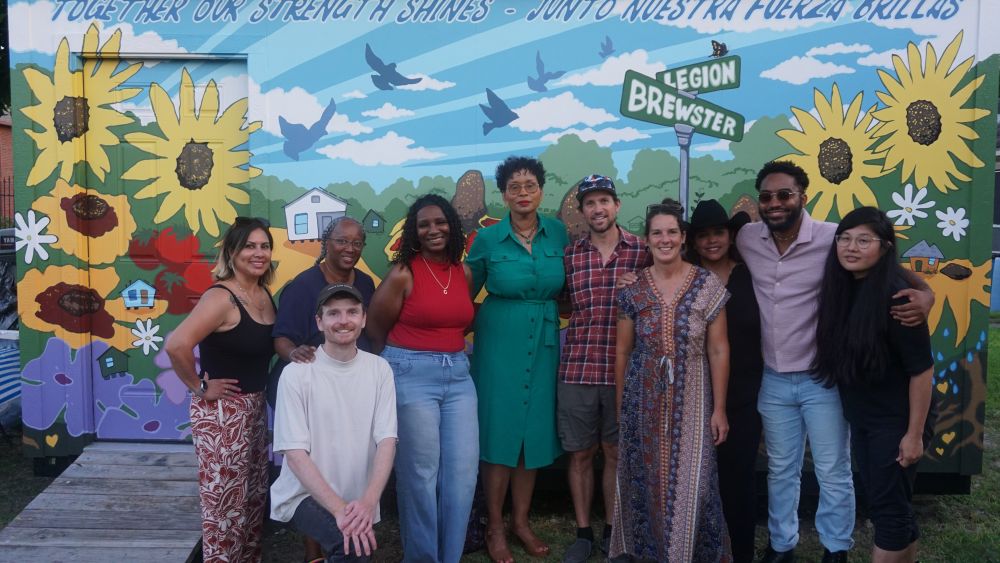
The mural co-created by local artists and community members are meant to show the thoughts, feelings, and adversity that people living in the area have overcome. Mural artist David Cobb led the community’s process to design and install the mural located at Ms. Connie Bulware’s Hub House in Kashmere Gardens. These murals highlight beautiful images of sunshine perfectly interwoven in a thriving and lively community, and roots nurtured by golden hearts - capturing the sense of hope, trust, and self-determination that the residents have developed amongst themselves. Kristi Rangel, local artist and creator of the Witness Series, created a mobile mural to pop-up at community events in the neighborhood and center themes of culture, community pride, and advocacy. Both of these works are beautiful, and express what community leaders are trying to get accomplished in the community. The HCJM looks forward to the community and our supporters coming out to see these public works of art created by neighbors and artists working together.
Neighbor-to-Neighbor Steering Committee members with the finished mural