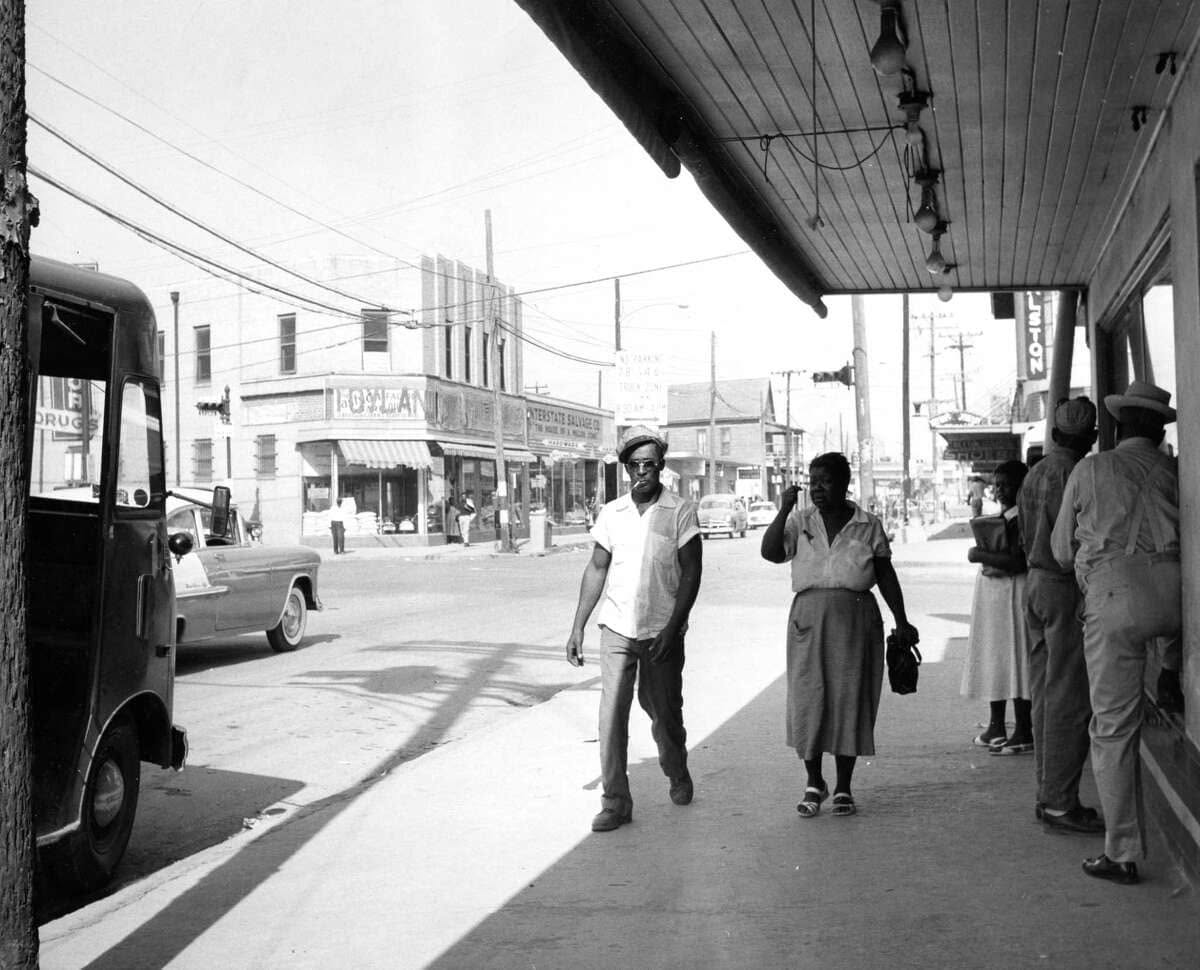
Lyons Avenue in the early 1960s was a bustling thoroughfare for Black-owned businesses
Tracking Fifth Ward's history over the last 80 years can help us protect the stories of Black and Latinx residents who make up this community.


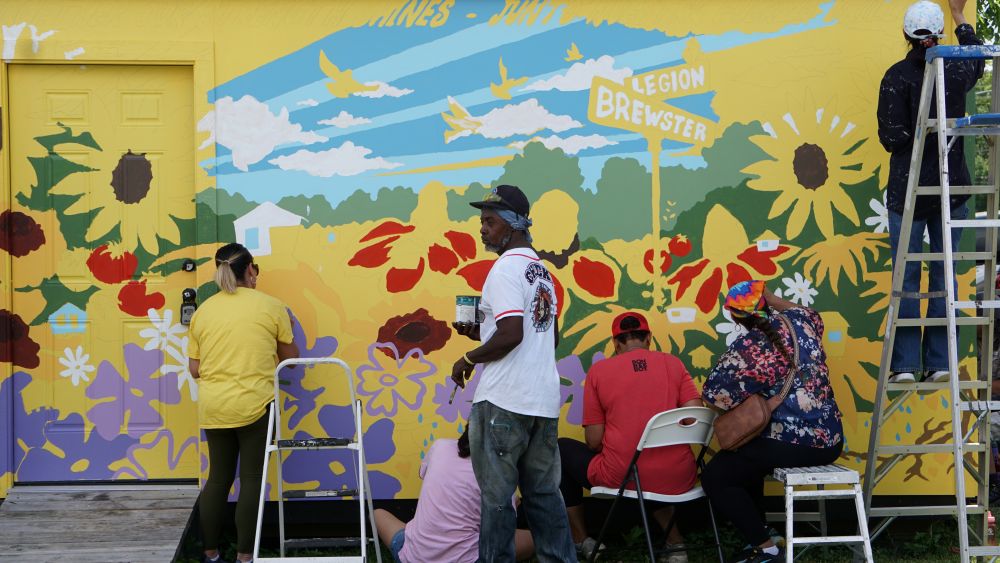
Houston is home to several African American and Latinx communities. Fifth Ward is a great example of what a Black and Brown community looks like. My name is Rontrell Meadows, and in this blog series, I will be highlighting Black and Latinx history in the community, and how different ethnic groups have historically faced similar circumstances and built solid relationships until today. Through harsh weather, displacement, and gentrification, it’s important to me to highlight the strength of this community and what its diversity means to the people living here.
During my summer fellowship with the Houston Climate Justice Museum, I interviewed community leaders like Sandra Edwards, Joetta Stevenson, and many others about the history of Fifth Ward. All of them said the same thing, “We didn’t have to leave the community for anything.”
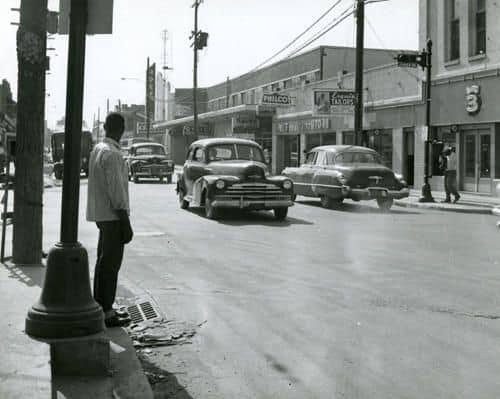
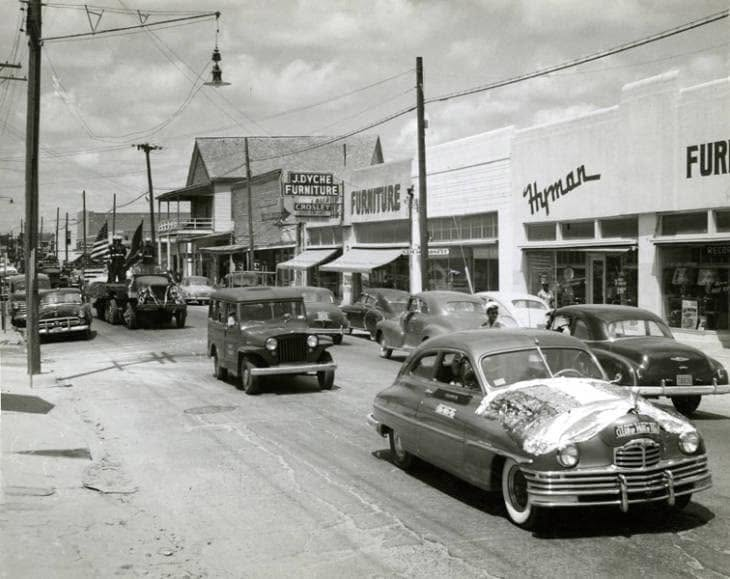

Fifth Ward was founded in 1866, right after the Civil War ended. It started off as a community where many Black and White families lived. But once the year 1880 came around, mostly African Americans lived in the area. Over time, the community started to grow, with job opportunities in the Ship Channel and Southern Pacific Railroad (later called Union Pacific), which were located close to the neighborhood. Black businesses on Lyons Avenue started to gain notoriety across the city by the 1920s.
One of Lyons Avenue’s popular businesses was local restaurant Nickel Sandwich Grill, which is still around to this day. Places like the DeLuxe Theater served as a place where African Americans who lived in the community could go for entertainment. During the 1920s, the community had over forty Black owned businesses all located in Fifth Ward.

Fifth Ward’s booming businesses also benefited from local public education, and Fifth Ward is to this day still home to the Wheatley Wildcats. Phillis Wheatley High school was named after an African American poet and became one of few Houston's majority African American schools when the school opened on January 31, 1927. By the time the 1940s came around, the school had started to get overcrowded due to its growing population, and it was relocated to 4900 Market Street in 1949, on fourteen acres of land. This cost around two million dollars to build, and at the time was one of the most expensive high schools built in Houston. The new school had amenities like a swimming pool, gymnasium, a large auditorium, and a long list of other facilities.
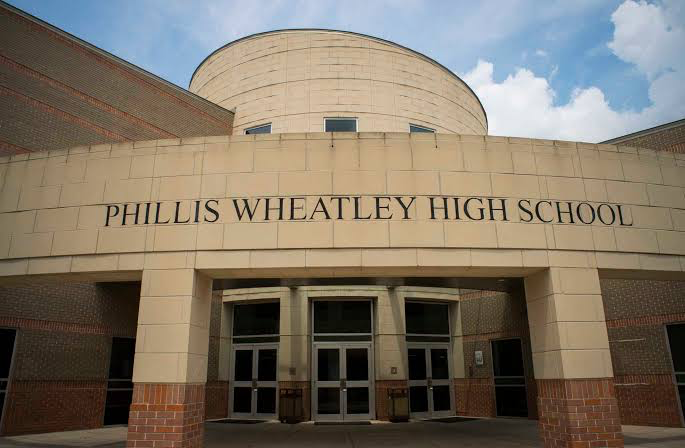
Later, during the 1950s and 60s at Lyons Ave’s peak for African American businesses and entertainment, both Wheatley High School and Yates High school were known as the two schools you wanted to go to if you were African American and you stayed on the South or Northside of town. The two schools had developed a long rivalry leading up to these years. One of the best rivalry games in football between the two schools was the “Turkey Day Classic” which was a football game between the two schools. Wheatley High School has a long list of notable African American leaders who attended the school, such as political figures like Barbara Jordan, Mickey Leland, Al Edwards.
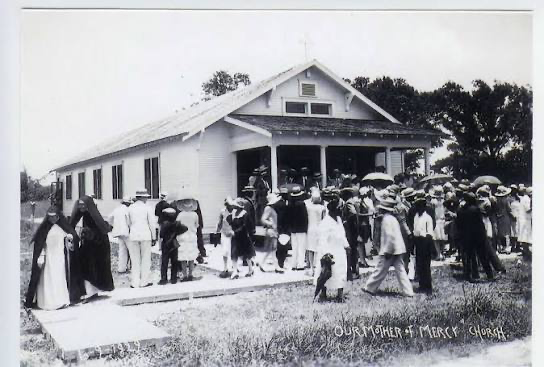
In the 1920s migrants from Louisiana started to move into Fifth Ward to join the Southern Pacific Railroad for work. These people were Creoles of color, who lived in the area known as “Frenchtown”. This community was established in 1922, and early people who occupied this area simply came to Houston trying to find work. Besides working for the railroad, other jobs that were available to Creoles of color were occupations like mechanics, carpenters, saw mill workers, and bricklayers. In 1927, the Great Mississippi Flood led to more Creoles moving to Houston.

Frenchtown is a good example of Fifth Ward’s shifting demographics and welcoming of newcomers. The growing population of Latinxs in the community began at the beginning of the 20th century. The Mexican Revolution played a major role in the growth of a Latinx population in Houston. This revolution sparked a migration of Latinxs from Northern Mexico to historic communities like Second Ward and Fifth Ward. Right at the year 1900, there were around 1,000 Mexican-Americans living in the City of Houston. By the 1910s, Latinxs started to form their own neighborhoods such as El Alacran (the scorpion) which is located in Second Ward. Around this time, we also started to see Latinxs move into north downtown areas in Houston like Fifth Ward. Latinxs were able to grow economically in areas like Fifth Ward by taking on occupations like being a cook, tailor, bootmaker, or oil refiner.
Fast forward to the 1980s, Houston's Latinx population would continue to grow due to civil wars created by American intervention in countries like El Salvador and Guatemala, which sparked a migration of Central Americans to Houston. Residents say Waco Street was the dividing line between Latinxs and African Americans in the Second Ward and Fifth Ward during this time period. But between the years of 1990 and 2000, we started to see Houston itself turn into a more diverse city, and lines started to blur between communities. By 2000, the population of Latinxs in Fifth Ward grew from 19% to 30% which changed the majority Black area into a more diverse community. This was not looked at as a bad thing in the eyes of many Black residents. I was able to sit down and talk to community leader Kathy Bluford-Daniels, and she said that “new Latin culture is accepted in Fifth Ward.” She says that people in her community have accepted parts of Latin culture like speaking Spanish because in some cases that's our only way to communicate. She also noted that people in Fifth Ward have block parties which tend to draw large crowds and bring people together from any background.
Especially when the community is going through something like a natural disaster, different cultural groups stick together. Black and Latinx communities in Fifth Ward have stood up for each other during climate disasters like hurricanes and floods. During my interview with Ms. Bluford-Daniels, I asked her, “What were the biggest challenges residents faced after major hurricanes?” She responded and said that “Most people do not have insurance. This led to a collaborative effort in the community to go around and cut down trees,” because they may have fallen on people's homes during a natural disaster. She also told me that some people lost their homes all together, and that neighbors in the community were able to put them in contact with local organizations to get damages repaired to homes in Fifth Ward.
One issue that many community leaders have raised in the Fifth Ward Community throughout my interviews is gentrification. While gentrification improves property values, it leaves out the people who are already living there, who might not be able to afford the rising prices. For example, the average price for a home in the community used to be around $28,977 in 1990, but by the year 2000, homes were $40,000 or more in the area. Now, prices have doubled or tripled due to influence from real estate developers and city officials driving economic and cultural development without making sure that the average Black or Brown family or homeowner will benefit from the economic growth.