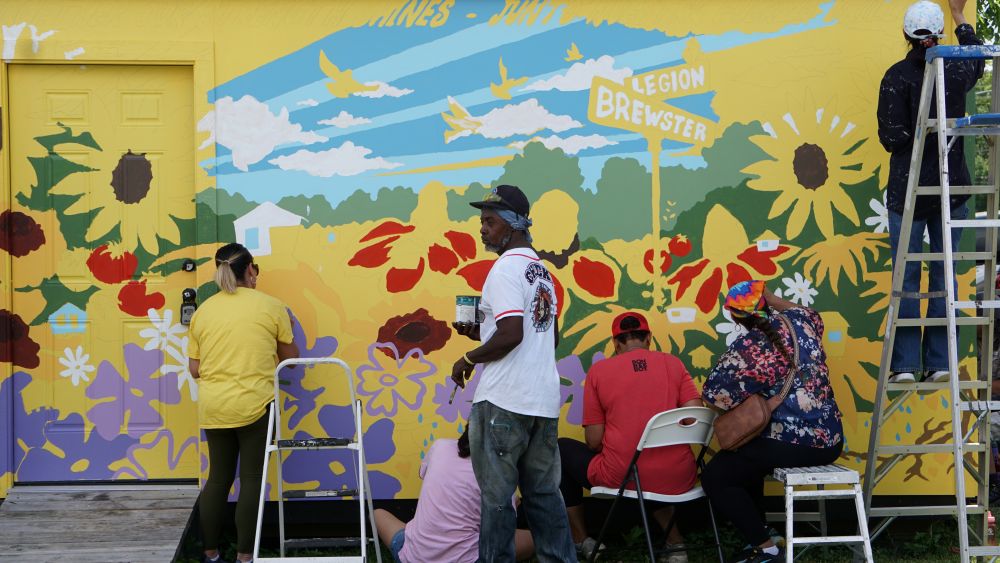
A week ago I was invited to attend a community meeting at the Fifth Ward multipurpose center where Ms. Lisa Jedkins, along with other community leaders, gave a great presentation on the Evergreen Negro Cemetery. I learned the history of the African-American burial location, and about some of the future plans for the cemetery. The Cemetery is managed by Why Not Legacy And Heritage and the Wells family in order to preserve the legacies of African-American residents including many military veterans who were buried here going back to the 1900s. Following my visit, I was invited to help volunteer with a woman named Ms. Lisa Jedkins, founding member of Project RESPECT, at the cemetery. Her husband, who goes by the name “Big Kountry,” owns the lawn care company that came out to help clean the site.Despite going through a recovery from a medical procedure, he was out there alongside us and helping out. He is a clear example of the determination and will power of the people in this community. Even with these community efforts, the future of Evergreen Negro Cemetery may be uncertain.
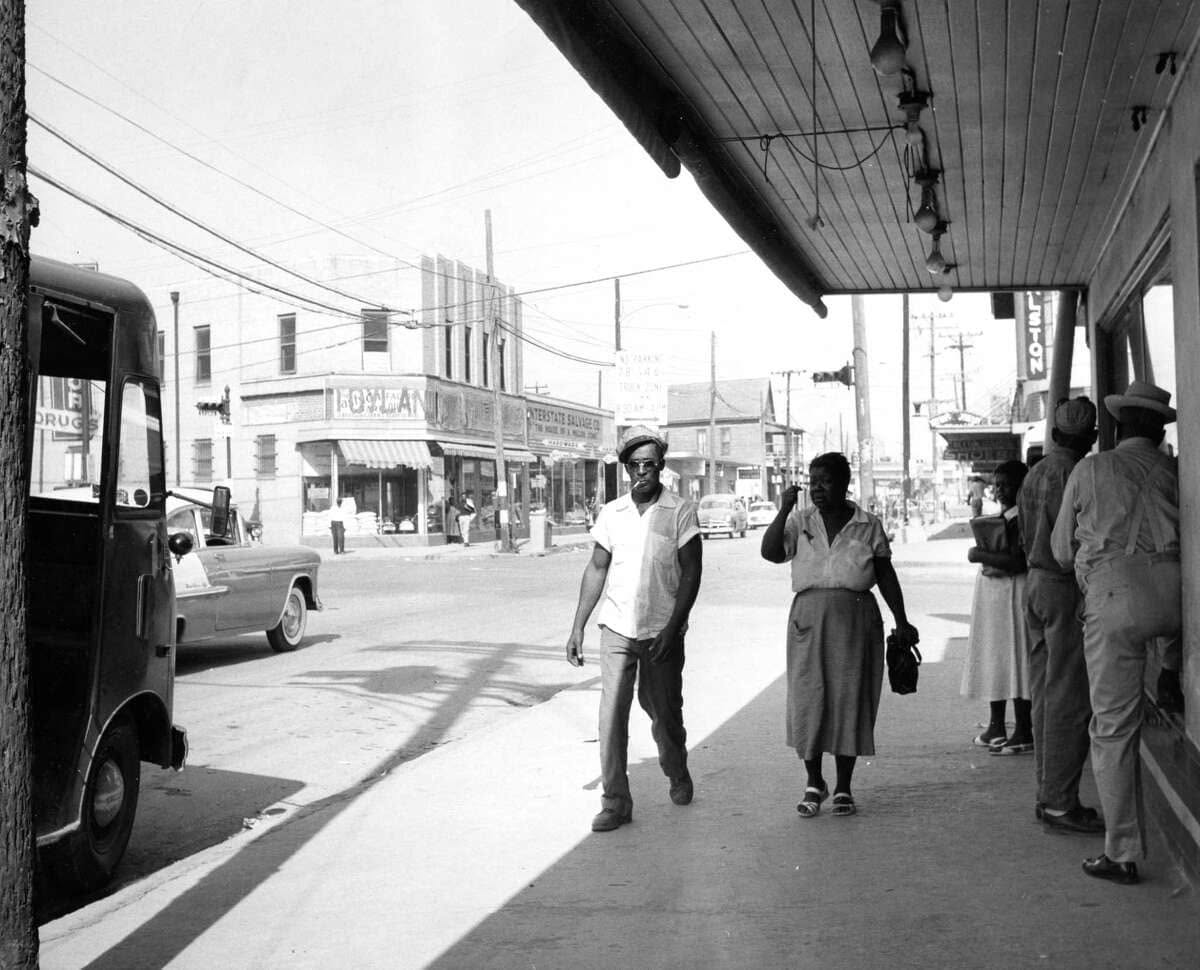
Evergreen Negro Cemetery is located in Fifth Ward at 5500 Market Street in Houston Texas. This cemetery is one of the oldest African American cemeteries in the city of Houston dating back to 1887. Alexander K. Kelley, Reverend Edward Lee, and W.B. Zinkey were residents of Fifth Ward who established the cemetery. Kelley was born into slavery but he would not die a slave. As a free man, he became a businessman and philanthropist. He also worked for the Southern Pacific railroad. Reverend Edward Lee was a religious leader in the community, and W.B. Zinkey was a businessman. The cemetery was a site of local cultural memory until 1960 when the City extended Lockwood Drive, breaking the cemetery up into two separate areas and displacing hundreds of bodies.
The dates of people buried in the cemetery range from 1887 to 1950. Former slaves, Buffalo soldiers, community members, and even veterans that fought in World War I are laid to rest there. Some notable people include Detective Isaac “Ike” Parsons, and Deputy Arthur Taylor who are two of the first Black officers to work for the Harris County Sheriff’s office. Parsons was just 29 when he passed away, and was recognised as “the most valued Black officer serving in the department” at the time. The day before Taylor was killed, he was promoted to special deputy of the sheriff’s office. Both of these Black community leaders, and protectors were laid to rest at Evergreen.
Evergreen Negro Cemetery is an important part of this community’s history and must be preserved. Project RESPECT and the Wells family, who have family interred at the cemetery, have been active in urging government agencies to protect this history. In March of this year, Project RESPECT and Why Not Legacy and Heritage among other community residents oversaw the reinterment of ancestral human remains that had been unknowingly disturbed during METRO Houston’s construction of the University BRT line going down Lockwood Drive. The construction project bisects the two halves of the cemetery, on either side of Lockwood. Wells said that visitors to the cemetery can see a ridgeline of trees going through the center of the cemetery alongside what used to be a walking path or thoroughfare in the 1800s.
Cemeteries carry important community memory, and failing to preserve them could mean that people who may move into the community as gentrification rises won’t have a connection to those who have come before. In Louisiana’s St. James Parish, community members were able to get a historical landmark designation for a cemetery that would have been in the way of a development by plastics company Formosa Chemicals.. By protecting this historical landmark, communities were able to rise up against corporate power and preserve both their environment and their history. As community members in Fifth Ward continue organizing against industrial pollution and now developer expansion, protection of places like Evergreen Negro Cemetery will be more important than ever, and can help to bring people back into green spaces as a result.